History and Overview of Blue Laws: A Comprehensive Definition
Blue laws, also known as Sunday laws, have a long and complex history. These laws, which restrict certain activities on specific days, particularly Sundays, have been a part of legal and social systems across the world. This article delves into the definition, history, and implications of blue laws.
Defining Blue Laws
Blue laws are regulations enforced in certain regions to restrict or ban activities on Sundays, traditionally observed as a day of rest. The term “blue laws” is believed to have originated from the blue paper on which these laws were originally printed in the 18th century.

These laws can vary significantly from one region to another, and their enforcement can also differ. Some blue laws prohibit selling specific items on Sundays, while others restrict certain types of work or commercial activity.
Examples of Blue Laws
Blue laws have been implemented in various forms across different regions and cultures. For instance, in some U.S. states, it is illegal to sell alcohol or cars on Sundays. In other countries, such as Germany and Austria, there are laws restricting shopping hours on Sundays.
It’s important to note that not all blue laws are religious in nature. Some blue laws are secular, enacted to ensure a common day of rest for workers, or to promote social and recreational activities.
Historical Context of Blue Laws
The concept of blue laws has a rich historical context. The first known blue laws were enacted in colonial New England, where Sunday was considered a day of rest and worship. These laws were strictly enforced, and violations could result in severe penalties.
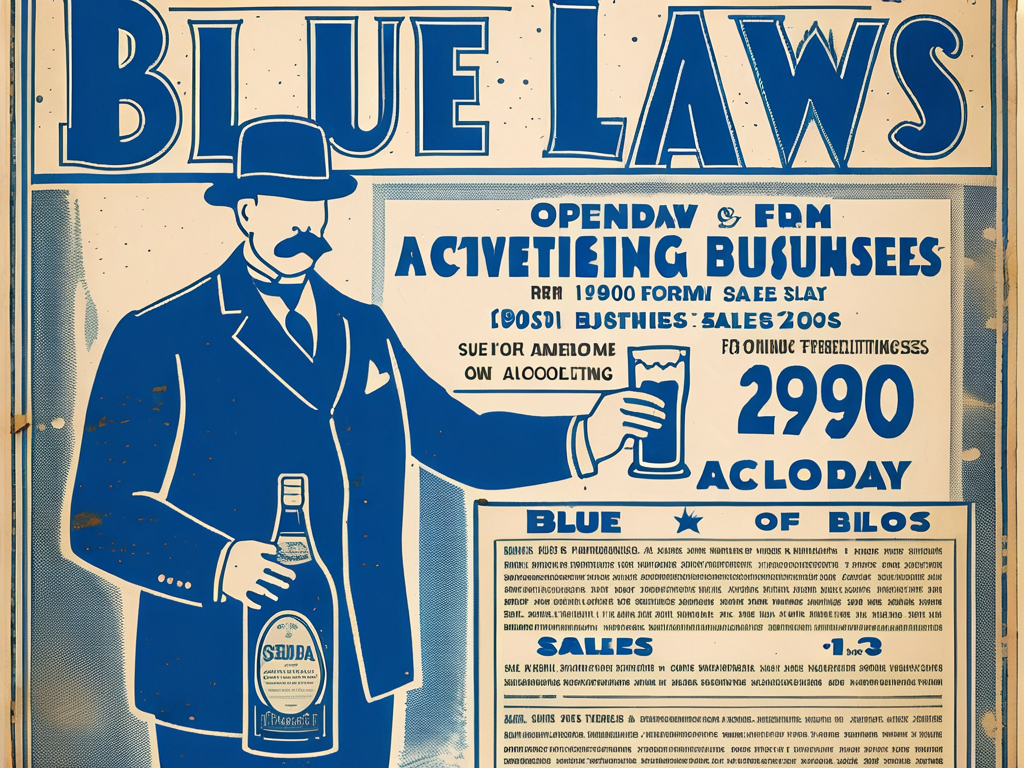
The origin of blue laws can be traced back even further to the biblical concept of Sabbath. This day of rest was observed by Jews and later adopted by Christians. The idea of a day of rest was then incorporated into civil law in various forms. It has been applied to varying degrees across different societies and cultures.
Evolution of Blue Laws
Over time, blue laws have evolved and adapted to changing societal norms and values. In the United States, for example, many blue laws were repealed or became unenforced in the 20th century due to growing secularism and commercialism.
However, some blue laws still remain in effect today, reflecting the ongoing tension between religious traditions, economic interests, and individual freedoms. These laws continue to spark debates about their relevance and constitutionality in modern society.
Implications of Blue Laws
The implications of blue laws are multifaceted, affecting various aspects of society. On one hand, these laws can be seen as a way to preserve religious traditions and promote communal rest. On the other hand, they can also be viewed as an infringement on individual rights and economic freedom.

From an economic perspective, blue laws can have both positive and negative impacts. They may limit commercial activity. However, they can also create a predictable weekly rest period for workers, potentially improving work-life balance.
Legal Controversies Surrounding Blue Laws
Blue laws have been the subject of numerous legal controversies. Critics argue that these laws violate the principle of separation of church and state, as they impose religious observances on the general public. There have been several legal challenges to blue laws, with varying outcomes.
Despite these controversies, blue laws have proven to be remarkably resilient, reflecting the enduring influence of religious and cultural traditions on legal and social systems.
Conclusion
In conclusion, blue laws are a fascinating aspect of legal and social history. Their relevance and enforcement may vary across different regions and cultures. However, their existence offers a window into the complex interplay between religion, law, and society.
As society continues to evolve, the future of blue laws remains uncertain. However, their enduring presence serves as a reminder of the ongoing dialogue between tradition and progress in our collective journey towards a more inclusive and equitable society.
Reflecting on blue laws’ impact, alcohol servers must be well-informed and certified in the service industry. Certs University offers an engaging, game-based online certification experience that fits your schedule and ensures you’re up-to-date with your state’s regulations. Whether you’re in California, Texas, Florida, New York, Ohio, New Jersey, or Illinois, our courses are tailored to meet official state requirements. Find your state and start your journey towards responsible serving and contributing to a safer community today.